The history of plush toys runs from a felt elephant sewn in Germany in 1880, through the teddy bear boom of the early 1900s, to Japan, where the kawaii movement of the 1970s turned soft toys into characters with names, personalities and fan clubs. A 1972 “panda boom” in Tokyo, Hello Kitty in 1974, crane-game prizes in the 1980s, Studio Ghibli’s Totoro in 1988 and character makers like San-X are the reason so many of today’s favourite plushies have round bodies, big heads and tiny, sweet faces. This guide follows that journey step by step, with only verified dates and names.
Key Takeaways
- The first plush toy business began in 1880, when Margarete Steiff sold felt elephants in Germany.
- The teddy bear (1902–1903) made soft toys a worldwide habit.
- Japan’s kawaii culture of the 1970s changed how plush looks: rounder, softer and more baby-like.
- Pandas, Hello Kitty and crane games made cute plush part of everyday life in Japan.
- Anime and character studios, from Totoro to Rilakkuma and Sumikko Gurashi, turned plushies into collectibles.
- Social media keeps the story going with characters like Chiikawa and trends like capybara plush.

Plush Toy History at a Glance
| Year | Where | What happened |
|---|---|---|
| 1880 | Germany | Margarete Steiff sews a felt elephant, the start of the Steiff company |
| 1902–1903 | USA and Germany | The teddy bear appears, named after President Theodore Roosevelt |
| 1970s | Japan | Kawaii culture spreads through handwriting, stationery and fashion |
| 1972 | Tokyo | Giant pandas Kang Kang and Lan Lan arrive at Ueno Zoo |
| 1974 | Tokyo | Sanrio introduces Hello Kitty |
| 1985 | Japan | Sega releases the UFO Catcher crane game |
| 1988 | Japan | Studio Ghibli releases My Neighbor Totoro |
| 1996 | Japan | Pokémon launches with the first Game Boy games |
| 2003 | Japan | San-X introduces Rilakkuma |
| 2012 | Japan | San-X introduces Sumikko Gurashi |
| 2020 | Online | Illustrator Nagano begins sharing Chiikawa |
Where Did Plush Toys Come From?
People have sewn soft toys at home for centuries, but plush as a product you could buy in a shop started with Margarete Steiff. A seamstress from Giengen an der Brenz in southern Germany, she used a wheelchair after childhood polio and ran a small business making felt clothing. In 1880 she sewed a little felt elephant meant to hold pins. Children adopted it as a toy instead, and the elephant became the first product of what grew into the Steiff toy company.
The word “plush” itself describes a fabric: a soft cloth with a long, raised pile. Early plush toys were covered in mohair plush made from angora goat hair and stuffed with wood wool, so they were firm and heavy. In Japan, soft toys are called nuigurumi, and the much later craft of crocheting small stuffed animals is known as amigurumi, from ami (knitted or crocheted) and nuigurumi.
Why the Teddy Bear Changed Everything
In November 1902, US President Theodore Roosevelt refused to shoot a black bear that had been tied to a tree for him during a hunt in Mississippi. Cartoonist Clifford Berryman drew the scene for the Washington Post, and Brooklyn shopkeepers Morris and Rose Michtom answered with a plush bear they called “Teddy’s bear.” At almost the same time in Germany, Richard Steiff, Margarete’s nephew, designed a jointed mohair bear that won a large American order at the Leipzig Toy Fair in 1903.
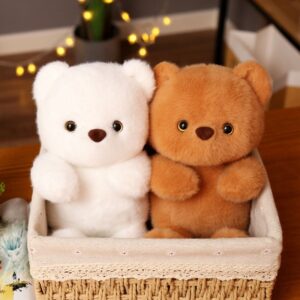
The teddy bear proved that a soft animal could be a companion rather than a novelty. It set the pattern for everything that followed: a cuddly body, a friendly face and a name. When kawaii designers in Japan reworked that pattern decades later, the bear was one of their favourite starting points. You can explore that blend in our kawaii teddy bears guide.

How Did Kawaii Culture Shape Plush Toys?
Kawaii (かわいい) means cute, lovable or adorable. As a culture, it grew in Japan in the 1970s, when teenage girls popularised a rounded, bubbly style of handwriting decorated with hearts, stars and little faces. Stationery, accessories and fashion soon followed, and cuteness became a way to express softness, playfulness and a little rebellion against a serious adult world. For the meaning behind the word, see our guide to what “kawaii desu” means.
Kawaii design leans on features that people instinctively find endearing. Zoologist Konrad Lorenz described this set of traits, the Kindchenschema or “baby schema,” in 1943: a large head, big low-set eyes, a small nose and mouth, and a round, soft body. Look at almost any Japanese character plush and you will find exactly those proportions.
| Feature | Classic teddy (early 1900s) | Kawaii plush |
|---|---|---|
| Head | Small, with a long snout | Large and round, often as big as the body |
| Eyes | Small boot buttons or glass | Large, set low on the face, or tiny dots |
| Mouth | Stitched, often serious | Tiny or missing entirely |
| Body | Long limbs, humped back | Short limbs, soft and squishy |
| Colour | Gold, brown, cream | Pastels, white and bright accents |
| Identity | A generic bear | A named character with a story |
The 1972 Panda Boom
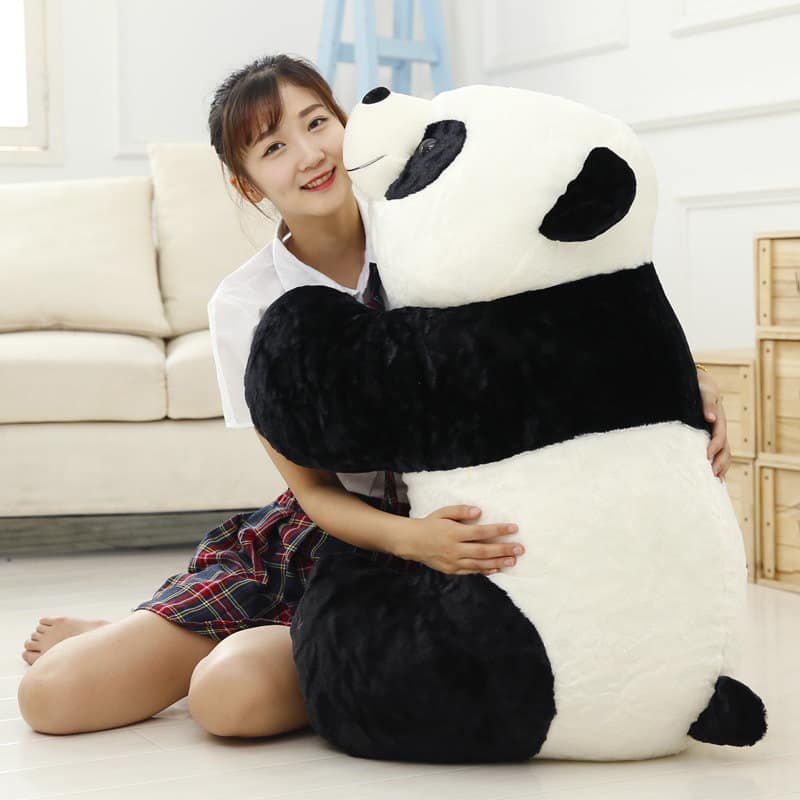
In October 1972, to mark the normalisation of diplomatic relations between Japan and China, two giant pandas named Kang Kang and Lan Lan arrived at Ueno Zoo in Tokyo. Huge crowds queued for a glimpse of them, and Japan went through a “panda boom,” with panda toys, sweets and goods everywhere. The panda, a real animal that already looked like a living kawaii character, became a lasting favourite in Japanese plush.
Hello Kitty and the Rise of Character Goods
The company Sanrio, founded by Shintaro Tsuji, introduced Hello Kitty in 1974. Designed by Yuko Shimizu, she first appeared on a small vinyl coin purse in 1975 and is usually drawn without a mouth, so fans can imagine whatever mood they like. Hello Kitty proved that a simple, cute character could sell almost anything, from pencils to plush, and Japanese companies built a whole market of “fancy goods”: affordable, cute character items for everyday life.
This is the key difference between Western and Japanese plush history. In the West, the teddy bear was a toy first. In Japan, the character came first, and the plush was one way of bringing that character home. To see how cute style spread from goods into clothing, read about the Japanese kawaii fashion designers who shaped Harajuku.
How Crane Games Made Plush a Prize
In 1985, Sega released the UFO Catcher, a crane game with a glass case, bright lights and a claw shaped like a flying saucer. Prize machines filled with plush became a fixture of Japanese game centres, and winning a soft toy became a small thrill in its own right. Many character plushies in Japan are still released as crane-game prizes, which helped make collecting part of plush culture.
From Mohair to Mochi: How Plush Got Softer
The squishy feel of modern kawaii plush is a fairly recent development. The first teddy bears were covered in mohair and packed with wood wool, so they held their shape but felt firm and scratchy. After the Second World War, synthetic fibres such as acrylic and polyester replaced mohair for most toys, and polyester fibrefill replaced wood wool. Plush became lighter, cheaper and washable.
Later fabrics pushed softness even further. Short-pile polyester fabrics with a velvety, silky touch, often sold as minky, became common in baby blankets and plush toys. In Japan, the word mochi-mochi, named after soft, chewy rice cakes, is used for stretchy, squeezable plush that slowly returns to shape. That texture suits kawaii design perfectly: a round body that invites a hug.
Anime and Film: Totoro, Pokémon and Friends
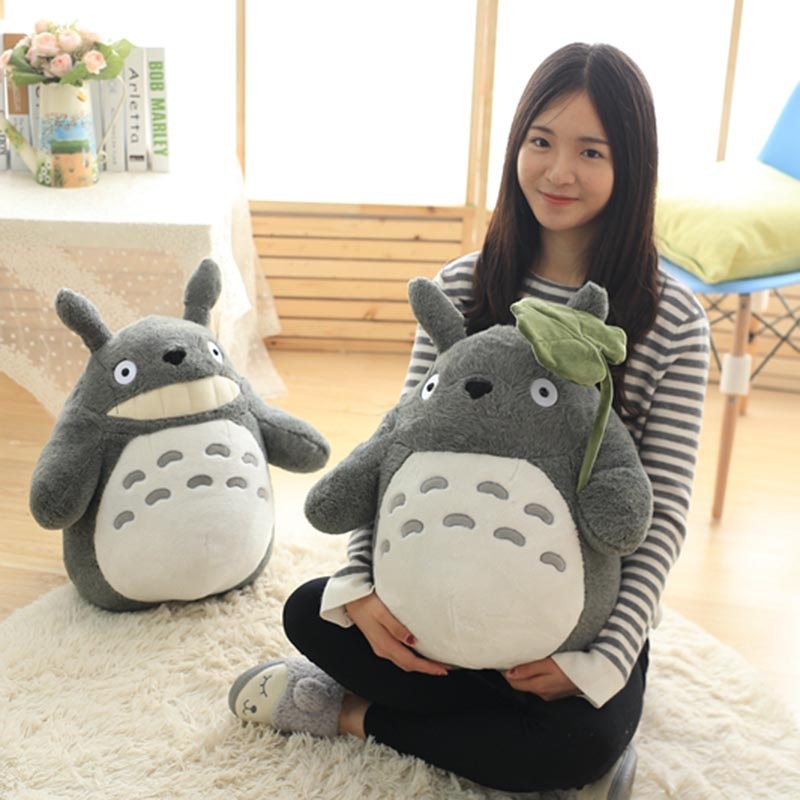
Animation gave plush toys their biggest audiences. My Neighbor Totoro, directed by Hayao Miyazaki for Studio Ghibli, was released in 1988. The round, grey forest spirit became so beloved that he appears in the studio’s logo, and Totoro plushies remain among the most recognisable soft toys in the world.
In 1996, Pokémon launched in Japan with the Game Boy games Pocket Monsters Red and Green. Its creatures, Pikachu above all, were made for merchandise: small, colourful and instantly lovable. Anime and game plush showed that soft toys could appeal to teenagers and adults as much as to children.
The San-X Era: Rilakkuma and Sumikko Gurashi
Tokyo stationery and character company San-X created some of the most popular plush characters of the 21st century. Rilakkuma, designed by Aki Kondo and introduced in 2003, is a lazy brown bear whose name combines “relax” and kuma, the Japanese word for bear. In a way, he is the kawaii answer to the teddy bear: soft, round and happiest doing nothing.
Sumikko Gurashi, designed by Yuri Yokomizo and introduced in 2012, means “life in the corner.” Its shy characters, such as a polar bear who is always cold and a piece of fried pork cutlet edge, all feel most at home tucked into corners. Their tiny faces and pastel colours made them ideal for plush, and they are now collected in every size. Watch our Sumikko Gurashi plush video to see them up close, or browse the Sumikko Gurashi collection.

The Social Media Era: Chiikawa and Capybaras
The newest chapter of plush history is being written online. Illustrator Nagano began sharing Chiikawa in 2020. The name comes from the manga’s full title, which roughly means “something small and cute,” and its characters Chiikawa, Hachiware and Usagi quickly became plush favourites across Asia and beyond. Shop the Chiikawa collection.

Real animals have their moment too. Japan has a special fondness for the capybara, thanks partly to Izu Shaboten Zoo, which began letting its capybaras soak in warm baths in 1982, a sight that still draws visitors every winter. The calm, round capybara now ranks among the most popular plush animals online. See our capybara plushies page and the capybara collection.

Kawaii Plush Today
Kawaii plush is no longer just a toy for children. Adults collect characters, decorate whole rooms with them and use oversized plushies as pillows and comfort companions. A few ways the history shows up in today’s collections:
- Character collecting: fans gather complete sets, a habit that began with character goods and crane-game prizes. Start with our collectible plushies.
- Room decor: plush is part of the kawaii bedroom look. Get ideas from our kawaii room guide.
- Giant plush: the cuddle-size trend fits kawaii proportions perfectly. Explore giant stuffed animals.
- Gifts: a character plush is a classic present. Our gift guide and kawaii Christmas gift ideas have plenty of picks.
For a full overview of styles and characters, read our kawaii stuffed animals guide, and dive deeper into the culture behind them on our Japanese culture page.
Note: Kawaii Merchandise is not affiliated with the companies, studios or characters mentioned in this article. They are named for historical reference only.
Frequently Asked Questions
What was the first plush toy?
The first commercially successful plush toy was a felt elephant made by Margarete Steiff in Germany in 1880. Homemade soft toys existed long before, but hers was the first to launch a toy business.
What is a plush toy called in Japanese?
A stuffed toy is called a nuigurumi in Japanese. Small crocheted stuffed animals are called amigurumi.
When did kawaii plush become popular?
Kawaii culture grew in Japan in the 1970s. The 1972 panda boom and Sanrio’s Hello Kitty (1974) helped make cute plush and character goods part of everyday life.
Why are kawaii plushies so cute?
They use the “baby schema” described by Konrad Lorenz: large heads, big low eyes, small mouths and soft round bodies, features people instinctively find endearing.
What does Rilakkuma mean?
Rilakkuma combines the English word “relax” with kuma, Japanese for bear. San-X introduced the character in 2003.
What does Sumikko Gurashi mean?
Sumikko Gurashi means “life in the corner.” The San-X characters, introduced in 2012, love squeezing into cosy corners.
Start Your Own Plush Story
From a felt elephant in 1880 to the teddy bear, Totoro and Chiikawa, plush toys have always reflected what makes people feel safe and happy. Find your next companion in our kawaii stuffed animals, kawaii teddy bears and teddy bear collections, or read our latest kawaii stuffed animal picks.
Or start at the Kawaii Merchandise homepage to see our newest plush arrivals.